

.svg)
.svg)
Why Is My Car Jerking When I Drive?
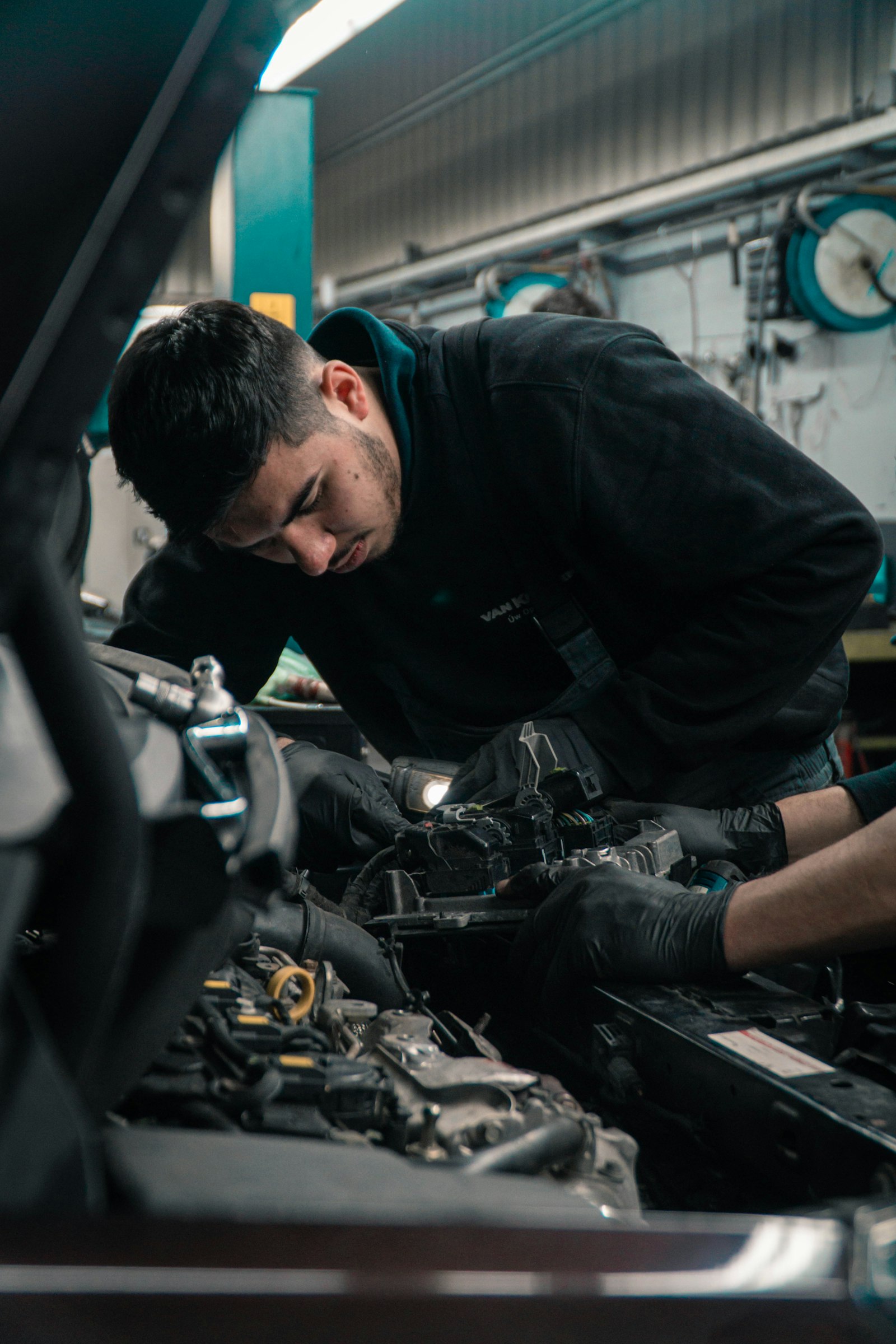
Jerking or hesitation while driving usually points to fuel delivery, ignition, or a transmission issue — here's how the pattern narrows it down.
Why Is My Car Jerking When I Drive?
A jerk, hesitation, or stumble while driving usually means the engine isn't getting a smooth, consistent supply of fuel and spark, or the transmission isn't shifting cleanly. When the jerk happens tells you which system to look at.
What the pattern tells you
- Jerks under acceleration, especially from a stop: Often a fuel delivery issue — a clogged fuel filter or failing fuel injector starving the engine at the moment it needs the most fuel.
- Jerks or misfires at a steady speed, sometimes with the check engine light on: Points to ignition — worn spark plugs or a failing ignition coil causing a cylinder to misfire.
- Jerks specifically during gear changes, or a delay before the car engages: Usually a transmission issue — worn engine or transmission mounts, or a transmission that needs diagnostic attention.
- Hesitates when you press the gas, especially at low speed: Can point to a dirty throttle body or a mass airflow sensor reading incorrectly.
Why it's worth checking sooner rather than later
A jerk from an ignition misfire means unburned fuel is passing through the engine, which can damage the catalytic converter over time if it's ignored. Fuel delivery and transmission issues also tend to get worse, not better, the longer they run.
What we check at Stellar Autoworks
We start with a scan for stored diagnostic codes and live data, then check fuel pressure and injector performance, inspect spark plugs and ignition components, and check engine and transmission mounts for wear.
If your car has started jerking on your Plymouth-area drives, schedule a diagnostic appointment with Stellar Autoworks and we'll narrow down the actual cause.