

.svg)
.svg)
Signs Your Alternator Is Going Bad and How to Check It
The symptoms of a failing alternator, how to tell a bad alternator from a bad battery with the jump-start test, and what a proper charging system test checks.
The most common signs of a bad alternator are headlights that dim or flicker at idle and brighten when you rev the engine, a battery or charging system warning light on the dash, electrical accessories behaving strangely, a whine or growl from the front of the engine, and a car that dies again shortly after a jump start. The quickest way to tell an alternator from a battery is the jump start itself. If the car starts on a jump and then stalls a few minutes later, the alternator is not charging. If it runs fine all day after a jump and is dead the next morning, the battery is the more likely problem.
Signs Your Alternator Is Going Bad
- Dimming or flickering headlights. Most noticeable at idle, at a stoplight, or when the heater blower comes on. Lights that brighten when you rev and fade when you let off are a classic charging symptom.
- The battery warning light. That light is a charging system light, not a battery light. It usually means system voltage has dropped below what the alternator should be producing.
- Electrical accessories acting up. Slow power windows, a radio that resets, gauges that drop out, or warning lights flickering on together. Low voltage makes a car behave in strange, unrelated-looking ways.
- Whining or growling from the front of the engine. A worn alternator bearing makes a growl that rises and falls with engine speed. A failing diode can produce an electrical whine.
- Burning rubber or hot electrical smell. Burning rubber often means the belt is slipping on a seizing alternator pulley. A hot, sharp electrical smell means the alternator is being pushed hard and running hot.
- Repeated dead batteries. A new battery that goes flat twice is a strong hint something is not recharging it.
- The car dies right after a jump start. The clearest sign of all. The engine is running on the last of the battery, and when that runs out, everything shuts off.
How to Tell a Bad Alternator From a Bad Battery
The two get confused constantly because both leave you stranded. The battery starts the engine. The alternator keeps everything running and recharges the battery once the engine is going.
Use the jump start as your test.
- Dies again within minutes: suspect the alternator. It is not putting anything back in.
- Runs fine, then dead the next morning: suspect the battery, or a parasitic draw pulling it down overnight.
- Cranks slowly but starts, and everything is fine afterward: usually a weak or aging battery.
- Was fine, then the dash lights lit up and the car quit while driving: almost always charging system.
The test is a good indicator, not proof. A dying alternator will kill a healthy battery, and a battery with a shorted cell can drag voltage down and make a good alternator look bad. That is why a shop tests both.
Checking Voltage at the Battery
If you own a multimeter, you can get a rough read in the driveway. Engine off, a healthy fully charged battery sits around 12.6 volts. Start the engine and measure again across the same terminals. A working charging system typically reads somewhere around 13.5 to 14.7 volts.
If the running voltage is barely higher than the off voltage, or it sags when you switch on the headlights and blower, the alternator is not keeping up. Readings well above that range point to a regulator fault and overcharging, which cooks batteries.
Be honest about what this test is. It is a snapshot, it does not measure how much current the alternator can make under load, and it will not catch a bad diode. Plenty of alternators pass a driveway voltage check and still fail on a proper tester. Treat it as a clue, not a diagnosis.
Why Minnesota Winters Muddy the Picture
Cold makes this harder to sort out. A battery loses a large share of its cranking power in deep cold, while the engine takes more power to turn over. Meanwhile the blower, defroster, heated seats, and headlights are all running, the heaviest electrical load of the year.
So in January a weak battery and a weak alternator look almost identical from the driver's seat. Slow cranking, dim lights, a car that needs a jump. Winter is also when a marginal part finally quits, and being stranded is a lot worse in February.
What a Shop Tests
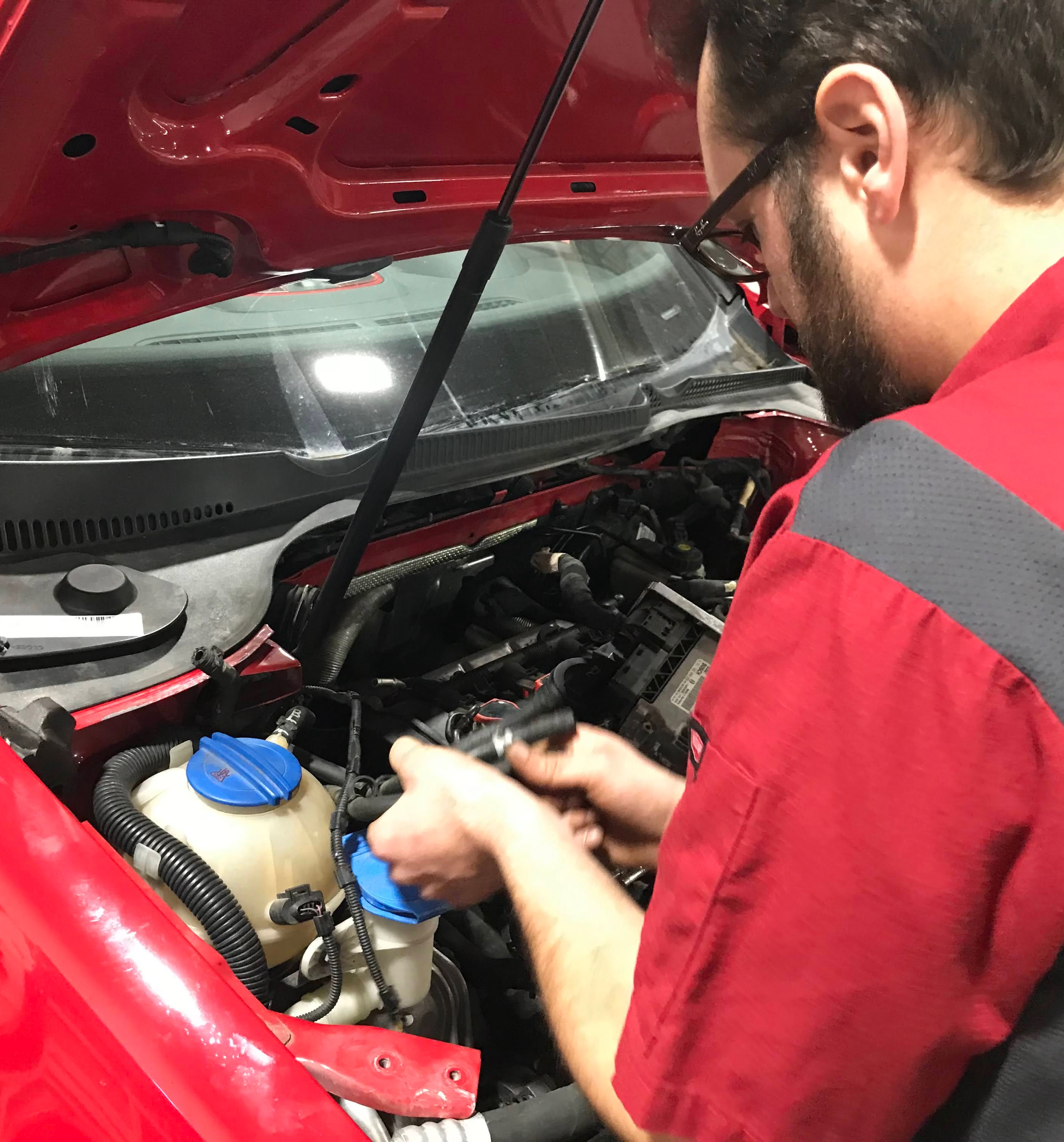
A charging system test takes only a few minutes. The battery gets load tested to see whether it holds voltage under a real draw. The alternator gets tested for output at idle and at higher rpm with accessories on, and for diode ripple, which catches a partly failed alternator that still makes some voltage. The belt, tensioner, and the main cable and ground connections get checked too, because a glazed belt or a corroded ground can imitate a bad alternator exactly.
When to Get It Looked At
If the battery light comes on while you are driving, treat it as urgent. You may have only a short time before the engine stalls. Shut off the radio, heated seats, and anything else you can spare, keep the headlights on if it is dark, and drive straight to a shop or home. Do not shut the engine off at a gas station and expect it to restart. Get in within a day or two for dimming lights at idle, a whine from the front of the engine, or a second dead battery in a short span. One dead battery after a dome light was left on is not an alarm, but if it repeats, have the charging system tested.
If you are not sure whether you need a battery or an alternator, we can test both and tell you which one it is. Stellar Autoworks is in Plymouth and serves the west metro, including Golden Valley, Minnetonka, St. Louis Park, Hopkins, and Wayzata, and qualifying repairs carry a 24-month/24,000-mile warranty. schedule service before it leaves you stranded.